Disinflation Nation: Perimeter Price Declines, Softening Transactions & Price Investments Suggest a Tough 2026 Outlook for Food Retailers
TLDR: We think Wednesday’s Albertson’s Q3 print (ACI -3.7% for the week) is a harbinger of tougher headlines and shakier outlooks for all food retailers, even vendors. Input costs are down, most sharply in pass through perishables, hurting the ID sales outlook. It now seems food retailers are using any benefits from same as fuel for price investments to gain traffic share in early 2026, while already navigating unit declines and major digital transformations.
Costs Are Down, Most Heavily At the Perimeter. Weighted average food industry costs are down -9.0% y/y, with some of the heaviest declines in pass through categories like meats (-33%y/y) & dairy (-24% y/y) that comprise a substantial (~20%) component of sales in a typical grocery store (See Fig. 1 & 2). Those more mechanical price decreases will likely affect headline comp negatively.
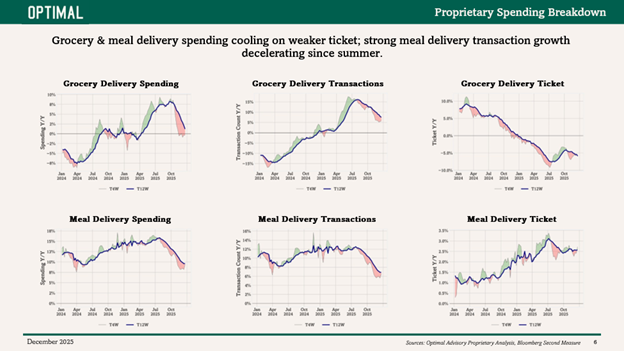
Food Retailers Are Investing Tailwinds in Price to Protect Traffic, Even Using AI To Help. From recent trends & commentary, its clear food retailers intend to invest cost tailwinds in price. Furthermore, they are doing so in the context of declining industrywide units, alongside softening spending & transaction count (See Fig. 3 & 4) in both mainstream and premium grocery. Until fall, premium grocery had been outperforming considerably — its now also decelerating.
Last Wednesday, while suggesting a lower near-term ID sales outlook, Albertson’s noted :“trends improved sequentially .. reflecting the impact of our surgical price investments. and to expect “selective price investments in key categories.” They added “we’ll be equipping our merchants with AI-driven insights and automated execution to optimize pricing.“
These echo sentiments shared by Kroger on 12/5/25: “We also increased our price investments this quarter.…these trends reinforce the importance of delivering value through lower prices, affordable quality in Our Brands products and more promotions for customers to save” They added “If you look at actually the breakdown of gross margin, selling grocery itself actually declined as we invested in pricing.“
Digital Success Remains a Key Bright Spot…. ACI just reported 21% growth in digital sales (9.5% of sales overall) for its 3rd quarter (November). Kroger’s e-commerce is now at $14 billion annual business (~10% of total) having grown double-digit for 6 straight quarters (October). Kroger is presently introducing in-house agentic, starting with Instacart’s AI-powered Cart Assistant on its desktop site & mobile app.
…And Increasingly the Key Battleground. ACI told us this week that digitally engaged consumers spend 2x-3xthe average customer, with a much higher lifetime customer value. Kroger’s recent pivot (November) to expand its Instacart partnership, close its own automated fulfillment centers, and expand other delivery partnerships was a clear nod to the urgency of improving delivery speeds and overall execution. We think the consumer will likely win with a better experience, but with uncertainty for retailers’ cash flow and profits.
Figure 1: Weekly Input Commodity Performance by Group
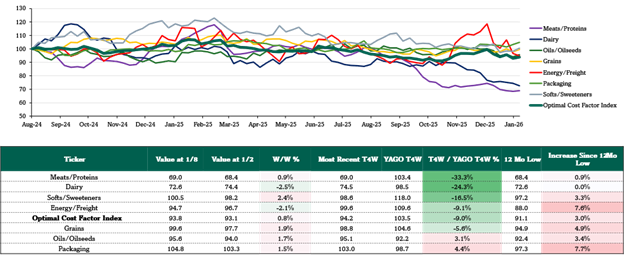
Sources: Optimal Advisory Proprietary Analysis, Bloomberg, FRED, USDA, BEA
Figure 2: Biggest Input Cost Movers y/y
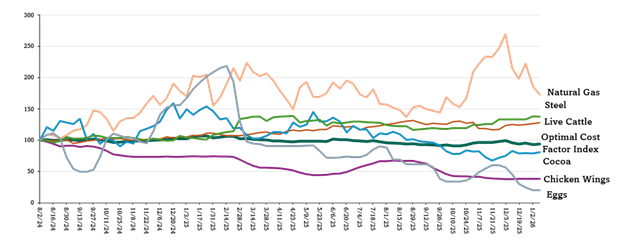
Sources: Optimal Advisory Proprietary Analysis, Bloomberg, FRED, USDA, BEA
Figure 3: Grocery Spending Summary
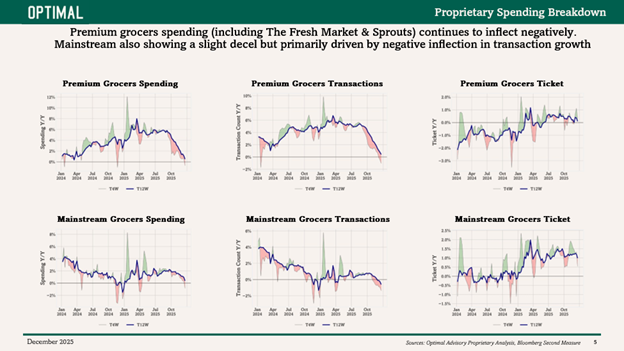
Figure 4: Grocery & Meal Delivery Spending Summary