Magnum Ice Cream Debut Could Be A Holiday Gift
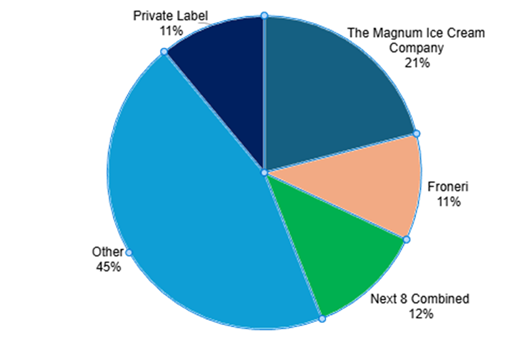
Yesterday’s disappointing Magnum debut suggests opportunity. Yesterday, shares of the Magnum Ice Cream Company, newly spun off from Unilever, first traded on multiple exchanges. Shares were valued (12/8 close) at roughly 8x its apparent “as separated” 2025 EV/EBITDA (+LSD% vs €1,340 2024A EBITDA) at the target leverage given (2.4x). One-off separation costs of €365mm for C2026 included in pro forma estimates are expected to lapse in 2028. This represents a discount (~25%) to US food peers on a pro forma basis despite much better apparent prospects, likely reflecting a temporary dislocation as the shares find permanent homes.
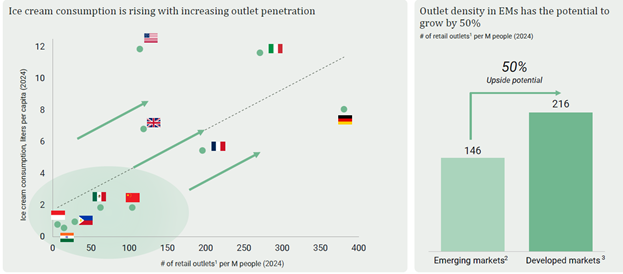
Much better outlook than most US food businesses. Magnum’s focus on premium & super premium products in developed markets, away from home consumption (40% of global sales), and emerging markets (31% of global sales) drives a much more attractive outlook than that of US based food peers. We note the “premium plus” segments of developed market ice cream have grown faster than mainstream (5% vs. 3%) with superior gross margin. Increased cabinet placement – adding to its dominant global cabinet share (30%) — should drive EM growth alongside superior demographics & increasing buying power in those markets. While ice cream has familiar challenges from GLP-1 and retailer alignment in the US, that’s’ a small part of their business getting perhaps too much attention right now.
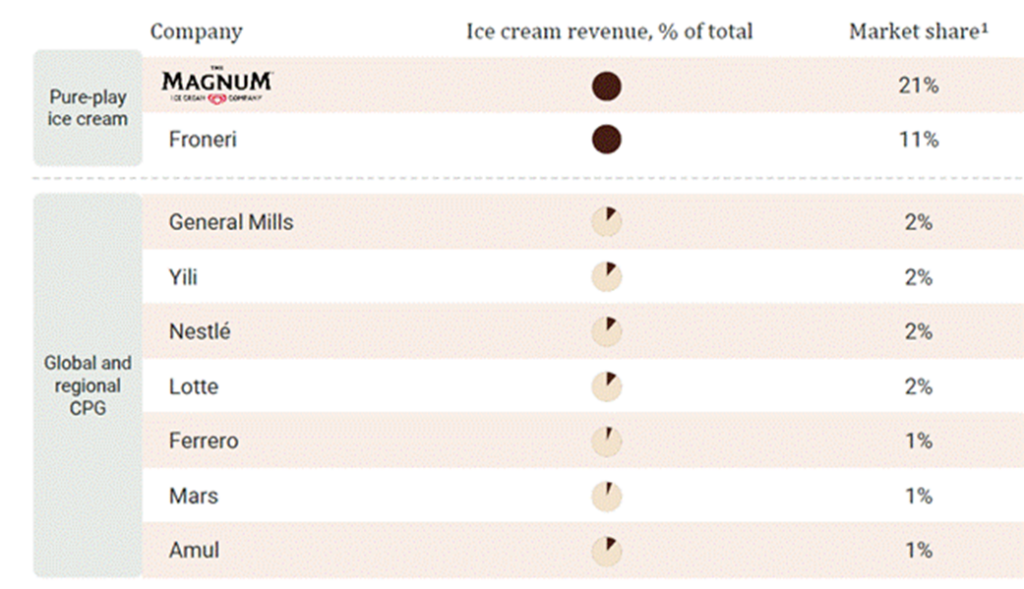
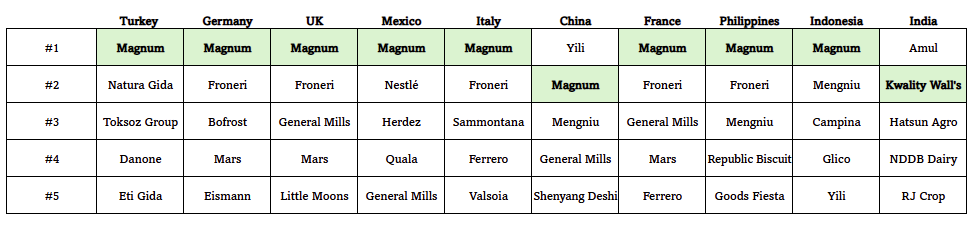
Dominant global share suggests resilience & consolidation. With 4 of the world’s largest 5 brands, 21% global market share, #1 positions in 8 of its 10 top markets (#2 in other two), Magnum enjoys formidable competitive advantage in the $75 billion global ice cream business. It’s #2 competitor Froneri is approximately half the size and comprised chiefly of licensed brands. This suggests opportunities for tuck-in acquisitions and share resilience as retailers optimize portfolios. See Figures 1-3.
The margin opportunity is credible due to mix, costs & Unilever. A continuous focus on the premium and away from home segments should drive profit per occasion and overall margin higher. In the near-term, we note sharp tailwinds from input costs including cocoa globally and dairy in the US should help. Finally, we note apparent margin opportunity relative to peers (e.g. PG) is evident across Unilever’s portfolio, lending credence to Magnum’s targeted 200 bps in overhead reduction.
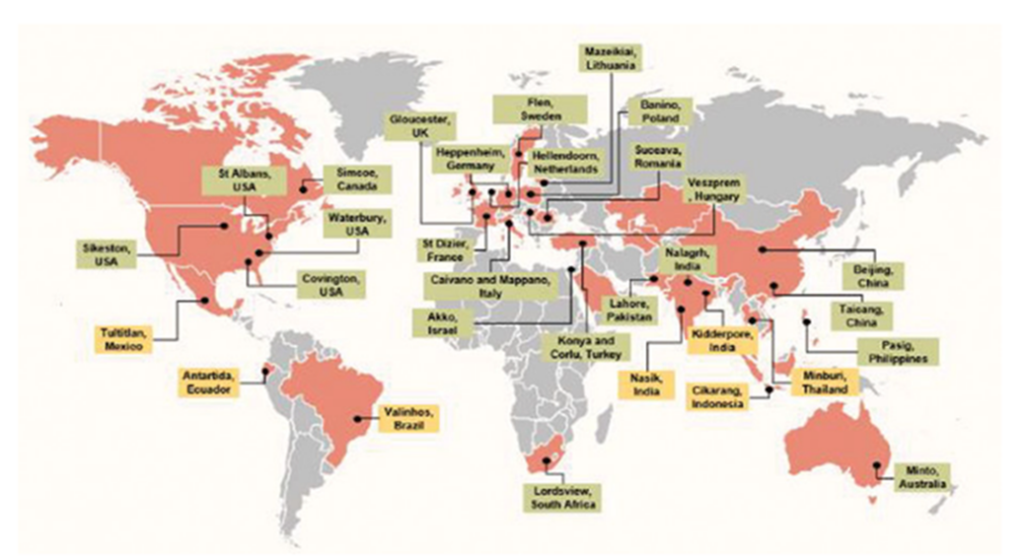
Complexity of the value chain is both a separation rationale and a durable competitive advantage. Unilever management cited heavy seasonality, an expensive frozen cold chain, and little point of sale overlap as reasons for the spin off. In the hands of a focused management, these are also barriers to entry that compare favorably to global peers who face similar challenges without Magnum’s scale.
Figure 1: Summary Global Market Share
Source: Company Reports
Figure 2: Magnum Relative Share Dominance
Source: Company Reports
Figure 3: Magnum Leadership in Key International Markets
Source: Company Reports
Figure 4: Cabinet Density & EM Opportunity
Source: Company Reports
Figure 5: Magnum Global Infrastructure

Source: Company Reports